Showing posts with label high school. Show all posts

Sunday, August 18, 2013

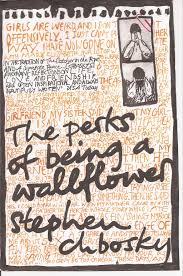
The Perks of Being a Wallflower


The Perks of Being a Wallflower
By Michael Chbosky

The Perks of Being a Wallflower is the sort of book that was written for me to hate. You know the type: A quirky 90210-esque coming of age story involving an awkward teen who feels alone, finds an amazing group of friends, loses those friends and then, ultimately, regains them in a flourish of altruism. Along the way, said troubled teen manages to safely navigate the potholed landscape of modern adolescence with relative  style and panache coming out the other end a better and more well rounded person.

Well,  The Perks of Being a Wallflower follows that tried and true story line. This epistolary novel follows the hijinks of Charlie, a sensitive (and slightly troubled) teen who begins his correspondence with an unnamed person (known as Friend) on the eve of his first day at high school. Over the course of the next twelve months of letters, Charlie meets a group of amazing friends centered around Patrick, an openly gay senior and his sister Sam, with whom Charlie immediately falls hopelessly in love like only high school boys are capable.

Like so many teenagers, Charlie is forced to deal with the full spectrum of adolescent problems: alcohol, drugs, suicide, relationships, sex, teenage pregnancy, abusive parents, homosexuality, mental disorders and the dreaded Rocky Horror Picture Show. And given that this is a book about teenagers, and given that the novel is set in Nirvana-drenched plaid of 1991, this potholed landscape of adolescence is served with a man-sized helping of angst.

I should have hated it. But I didn't. I liked it. And I liked it an unhealthy amount. And there are two reasons why.

I started high school back in 1990, which would make me a year (give or take) older than Charlie and slightly younger than his senior year friends. I suspect that if this novel was set any more recently (or any farther back in time) that I would have dismissed it with a series of eye rolls and gimme-a-breaks. But since it hit the proverbial nail (me) on the head (my susceptibility to nostalgia and sentimentalism), I was sucked in hook, line and sinker. The cultural markers were comfortably familiar and I liked the fact that the social hierarchy is (as it was back in my day) based on the movies you watched, the music you listened to and the clothes you wore. I have no idea whether that intricate social classification system is still in place, but it was comforting to read a very specific high school caste system and know where 15-year old me would have slotted in. The cultural references consistently made me smile, especially each mention of the Rocky Horror Picture Show, a film I watched literally dozens of times throughout my own school career.

Second, I recently chose The Perks of Being a Wallflower as the next book to teach my advanced English class in Taiwan. Taiwanese teenagers have such a different school experience from their North American peers. Theirs is a life filled with tests, studying and academic competition. High school students in Taiwan have very little free time to socialize. My students often hear me talk about high school in Canada and they are amazed at the swaths of free time I used to have. How I used to have a part-time job, friends and a social life. They are aghast to know that I got drunk as a teenager and the topic of drugs is so completely foreign to them that I simply don't even bother.

I thought The Perks of Being a Wallflower would be the perfect novel to give my students a taste of what high school life is like for the average North American. Granted, Charlie experiences an entire student body's worth of triumph and tragedy in a single year, but the sentiment is there. While I was reading the novel I felt a sense of pride that this novel was able to convey a lot of the emotion and atmosphere of high school life in North America and that my students would gain some perspective on it. They have always told me that North American high school sounds easy. I have always told them that it is difficult, but a different kind of difficult. This novel seemed like an apt presentation of the point I have been trying to make for a few years.

And the writing isn't terrible either. It is fun to watch how Charlie's writing ability matures throughout the novel indicating that despite the lack of mention in his letters, he is indeed attending and succeeding in the classroom (especially English). I also thought it was a cute literary trick to have the story vaguely mimic the novels his English teacher has assigned to him. Parts of the novel felt like an homage to various classic fiction.... especially Catcher in the Rye.

That's not to say that the novel is without its faults. The ending was particularly disappointing. I thought Chbosky had set himself up for a nice non-traditional ending but I found that he left it feeling far too much like the ending of one of Charlie's assigned novels. As well, it did suffer from an over abundance of issues whereby the characters literally endure every possible After School Special ever addressed. But when I read the novel through the eyes of my students these little things hardly seemed to matter. I'm really looking forward to the illuminating comparisons that The Perks of Being a Wallflower will illicit in class, and how they correspond with my own experiences in high school in the early 1990s.

I can't wait.

Sunday, August 28, 2011

Fifth Business


Fifth Business
By Robertson Davies

Fun fact: One of my high school English teachers had a nervous breakdown.

Actually Ms. Sturgess had two nervous breakdowns over the course of two years and she was my teacher both years.

Before you jump to conclusions, I was not the cause of these mental breakdowns. I was a pretty quiet high school student and I liked English class so I was hardly the sort of student that causes emotional and psychological duress among the faculty. I was more likely to be forgotten in a classroom than cause shenanigans. But suffer breakdowns she did, much to my academic disadvantage.

OK, I'm not trying to belittle Ms. Sturgess' psychological suffering. I am sure she suffered far more tragically during those few years (and beyond, perhaps, I have no idea) than I did. I have been blessed in the fact that I am (currently) mentally and emotionally stable. I have no real understanding of what sort of suffering is endured by those who experience a breakdown. I hope I never do. I didn't have bad feelings toward Ms. Sturgess, but she was my teacher for such a short time that I also didn't have particularly strong feelings for her either. As an adult I have looked back on her class and felt terrible for her. Whatever it may have been that caused such pain, I hope she overcame it. But at the time I was a kid and a breakdown seemed pretty unreal to me.

Back to the point. Regardless of Ms. Sturgess' mental health, I did suffer academically.

My high school English career started well enough. My grade 9 teacher was great. He had enough zeal to instill a love for reading and writing among a motley crew of slackers and burnouts. I don't envy teaching North american high school kids, especially the younger variety. It's really hard to make them care. I remember reading Twelfth Night and To Kill a Mockingbird, both stock standards of the Halton Board of Education at the time and both among my favorite books. By the time I started grade 10 I was really stoked about English, a testament to my grade 9 teacher. In grade 10 I was assigned Ms. Sturgess.

I don't remember much about the actual breakdown. She didn't break down dramatically in front of my class (or any class that I'm aware of) but she started to miss classes regularly by the third week of the semester. But week four or five (that's almost half the semester) we still had not been issued a novel. Eventually we were assigned a permanent temporary teacher whose name I have forgotten and no clear reason for Ms. Sturgess' absence was given. Rumors abounded, but the only clear reason was that she had had some sort of "episode." The sub was in a bit of a no-win situation taking over a class of students who had gotten used to the idea of not doing any real work in class. I'm sure she did her best, but I do not remember a single moment from that year's English class aside from Romeo and Juliet, which I hated at the time.

So I was really looking forward to grade 11 English and getting back on track with reading and writing. When September rolled around once again and I was assigned Ms. Sturgess, I was cautiously optimistic. Maybe a year's convalescence had helped and she was better prepared to deal with the rigors of teaching English. I was wrong. She never even showed up on the first day and we were assigned another permanent substitute for the semester. Try as they may, when a student knows a teacher is a substitute, it is never quite the same. The class was a dud from the get go.

I should have raised a stink but at the time I wasn't the sort of student that rocked the boat. I assumed you got the cards that were deal you and you made due. I suppose I could have transfered to another class with a more able teacher, but it just didn't occur to me.

So my stalled high school English career didn't really get off the ground until grade 12, which, I'm sorry to say, is a couple of years too late. My writing ability was in a sorry state (some might wonder whether it has ever truly recovered) and my depth of reading was pretty shallow. If it weren't for a series of extraordinary history teachers and one extremely excellent English teacher in my final year (Thank you Mr. Manzl and Mr. Switzer, wherever you two may be) I'm not entirely sure what would have become of me. That's not melodrama, that's the plain truth.

So what's this got to do with anything? Well, due to my two lost years of English, I'm probably the only student in the entire Halton School Board that didn't read Fifth Business. This Robertson Davies classic was used as an example of great Canadian literature and was virtually mandatory reading for high school kids in the 1990s. Not sure whether it remains part of the curriculum or not.

I'm actually glad I didn't get get around to reading this book until now. I don't think I would have liked this book in high school. Too slow, too thoughtful, too Canadian. I was all about the shock in high school. Give me All Quiet on the Western Front or Brave New World or something equally disturbing. A novel like Fifth Business would have seemed too plain, too close to home to enjoy.

Twenty years on, Fifth Business was a great book. I liked that my life is exactly half of Dunstan Ramsay's so that I could share in his reminiscence of his childhood, empathize in his musings on early middle age and read with interest his reflections on aging. It was a nice mix of remembrance and experience.

More importantly, I got the impression that this is not a great example of CanLit for young Canadians. It is much to conservative in nature for modern Canadian students (although there is something to be said about the conservative nature of Canadians, especially those of Robertson Davies generation). This book would have been out of touch in my day. It would seem positively archaic today. While I really did like this book as a stunning portrait of a Canada that ceases to be, I do hope that they have changed the curriculum and have found a new, better example of Canadian fiction for students to read.

As for Ms. Sturgess, I hope that she has recovered, found a modicum of happiness and has gone on to life to a ripe old age.