Showing posts with label politics. Show all posts

Tuesday, April 30, 2013

The New Republic


The New Republic
By Lionel Shriver

Lionel Shriver's 2012 novel, The New Republic, is actually a problematic manuscript with a checkered history. Originally penned in the late 1990s, this psychological novel about terrorism was dismissed by American publishers as too jejune for American readers. Following the attacks on September 11, 2001, and the proceeding years of earnest introspection (at least among literary circles) an ironic take on terrorism and journalism continued to frighten off publishers, until recently. Apparently the social and political climate of 2012 was ripe for an unabashed satire on media sensationalism and terrorism. In the meticulous Shriver style, there are no psychological tables left unflipped and no sociological surfaces left unswiped. Having recently finished Shriver's Orange-Prize winning novel We Need to Talk About Kevin, and loving it, I desperately wanted to love this novel as well. Alas, I didn't. But it's not all bad.

The New Republic is set in the fictional state of Barba, a drab, beard-like (Barba... get it?) appendage of land that extends into the Atlantic Ocean off Portugal's southern coast. Barba has recently become a European hotbed of terrorism under the guise of a paramilitary group known as the SOB – a radical terrorist cell fighting for Barban autonomy from Portugal and claiming responsibility for a seemingly random series of violent international attacks. Due to the rash of attention, foreign correspondents from the world's major media sources have descended on this European backwater previously known only for its unceasing gale-force winds, its tacky souvenir production industry and the hairy pear, a local fruit that is every bit as unappetizing as it sounds.

The foreign correspondents form a Greek chorus of media personalities (or lack thereof. Shriver's two-dimensional take on the members of the foreign press is rife with meaning), producing tired examinations, reasonings and rationales for the violence in lieu of any hard reporting on the ground. Joining this murder of squawking crows is Edgar Kellogg. Kellogg is a greenhorn journalist sent to Barba to replace Barrington Saddler, a larger-than-life personality who has gone missing and who may or may not have a lot more to do with the SOB than simply writing about them.

But the entire point of The New Republic isn't the narrative so much as the themes it illustrates, sometimes in bold relief. Shriver, obviously, takes aim at the notion of modern terrorism and the manner in which it is reported to illogical extremes but this novel is really about charisma. Why some people have it and others don't and what drives people who don't have charisma to emulate and ultimately turn on those who do have it. In this vein, Shriver is disappointingly predictable. Kellogg recounts the story of why he has quit his Manhattan law firm to become a journalist. He is determined to follow in the footsteps of his charismatic prep school friend with whom he hasn't spoken in decades. Turns out that his friend has grown up to become a milquetoast sycophant for the Daily Record newspaper and possesses none of the self-assurance that he possessed in school. This was like discovering the butler killed Lady Butterbum in the conservatory on page 12 of a 400 page book. You'd think Edgar would learn his lesson right there before shipping off to a european hellhole, but apparently Edgar isn't that bright. Diligently, Shriver trudges on and, lo and behold, exactly what she says will happen in the beginning actually happens at the end.

Predictability is certainly a problem, but my real problem with The New Republic was the characterization of Shriver's have-not anti-hero, Edgar Kellogg. Kellogg is simply irritating. He's blunt, rude and completely devoid of charisma. Furthermore, he seems to lack class, tact and common sense. He's also arrogant, haughty and condescending. He's incapable of hiding his true feelings and utterly incompetent at his job. I could go on, but you get the picture. Needless to say Edgar is a bastard.

While I understand that Shriver is attempting an examination of charisma and needed a character that was indeed lacking in it, but Kellogg is so relentlessly devoid of any emotions ascribed to charisma that he almost ceases to exist in any sort of reality understood by the reader. How does someone like Kellogg even ingratiate themselves enough with anyone to discover their lack of charisma? I wouldn't give Edgar 15 minutes before standing up and walking out on him.

By way of explanation, Edgar was once a morbidly obese kid and, though he lost the weight, he never lost the inferiority complex. Fair enough, I suppose. Consequently, Edgar has awkwardly shifted into adulthood with an acute sense of both entitlement and disdain for those around him. Why shouldn't he have what others have? He deserves it more than they do, anyway. In that respect he had transferred his personal self-loathing onto everyone else. That's some serious pop psychology right there.

In literary terms, this makes Edgar not so much a character but a caricature. He is, like the blathering idiot reporters at the local Barban watering hole, a predictable cartoon cut-out of what would happen if someone had zero charisma superimposed on a novel along side the world's most charismatic correspondent. This makes The New Republic a wolf in sheep's clothing. It is less novel and more a psychological and sociological diatribe.

Which is why the novel, as a whole, fails to impress. Don't get me wrong, Lionel Shriver's acute understanding of her subject matter is apparent, especially on the subject of terrorism and the media and the elements that would be used with such effect in We Need to Talk About Kevin are manifest throughout. Furthermore, the writing is, at times, sublime and, at points, this novel can be scathingly funny. But it lacks in any real movement, drags on so unnecessarily through the middle and leaves the reader with a rather cop out ending. Unfortunately, the strong qualities of this novel only made this reader feel cheated out of what could have been an extremely poignant book.

As it stands, it simply feels like a novel that should have remained right where Lionel Shriver left it in 1998... taking up a few megabytes of space on an out-dated hard drive. Perhaps the publishers were right the first time. Perhaps we didn't really need The New Republic.

Wednesday, October 19, 2011

Consider the Lobster


Consider the Lobster: And Other Essays
By David Foster Wallace

I like sports. I like almost everything about sports. I like the human drama, the potential for greatness (or tragedy) the story-lines and the athleticism. I like taking about sports, speculating about sports and listening to others talk about sports. And while I have my favorites (hockey, baseball and, these days, rugby) I've been known to sit down and enjoy virtually any sport on television. I'm not too discriminating. I like sports.

But there is one thing about sports I hate. I hate the media insistence on speaking with these athletes after a win or a loss. It'll go something like this:

Booth Announcer: Let's go down to Bob Sportscaster who's outside the locker room with Chet Superstar.

Bob Sportscaster: Thank you Booth. Chet, you guys put a win up on the board tonight. What was the team's strategy going into tonight's game.

Chet Superstar: Well Bob, we were just out there trying to make something happen, give it 110% and just play our game. We got a couple of lucky bounces that went our way and you've got to hand it to the boys in the locker room, we never gave up out there and we are just happy to come out of here with the win tonight.

You don't say.

There is nothing more pointless than listening to a professional athlete spew off a string of exhausted cliches. And sportscasters make entire careers out of sticking microphones in athlete's faces. Families eat, houses are bought, retirements are planned based on these useless and tedious repetitions. There is something repulsive about this idea.

I've always wondered whether there is a group of sports fans out there, slightly slow on the uptake, who are sitting in their armchairs thinking to themselves: "I wonder how Albert Pujols felt when he hit that game winning home run. I can't wait for the post-game interview. Maybe he was only giving 98% at the time."

Sheesh.

In Consider the Lobster, David Foster Wallace tackles this phenomenon deftly in an essay entitled How Tracy Austin Broke My Heart. Wallace reviews Austin's own book Beyond Center Court which Wallace characterizes as being "breathtakingly insipid." He peels back the layers of vapid text in an attempt to get to the root of the issue, namely that athletes seem to be extremely boring people, almost to the point of emotionless.

But whereas I see and understand the inanity of speaking to athletes about their professions, Wallace takes in a step further and opines that an athlete's emotionless demeanor in the face of massive public scrutiny and their seemingly uninspired quotes are a quality in itself. Athletes develop an ability to not think. To shut down and concentrate on the task at hand and not get distracted by the very real pressure of performing in from of million. They can actively not think.

But I digress.

What Wallace does, that I could never, ever do, is present a clear and thorough examination of a subject, far beyond that of your typical writer. Like any truly great writer, he sees things and thinks of things that others simply don't see or think about. He approaches subjects from angles other writers are simply unaware of. Whether it is the adult video industry (Big Red Son), the dictionary wars (Authority and American Usage), the darker side of right wing talk radio (Host) or whether lobsters really do feel pain when they are boiled alive (Consider the Lobster), Wallace brings a distinct brand of nuance, insight and comedy that is a refreshing break from most other writers.

The centerpiece of this collection is a masterful account of Wallace's time spent covering the John McCain campaign for Rolling Stone during the 2000 Republican primaries (Up, Simba). Rather than your typical political piece (It doesn't seem like Wallace ever talked to McCain directly), he chronicles the daily grind of the tech staff, the interns, the assistants. He exhaustively documents the travel, the badly catered meals, the endless boxes of Krispy Kreme donuts all wrapped in a package of co-ax cables and opportunities to smoke. All of this over the backdrop of the Chris Duren Affair, a rather conveniently placed episode that occurred during the South Carolina primary.

His essay is akin to eavesdropping on the servants, cooks and the jesters at a king's court. We learn that even the lowest, unpaid intern has a very real investment in the campaign and everyone from McCain down to the boom mike operators for his town hall meetings (THM) understand the implications of each potential political move during the campaign. It is a very real assessment on leadership and what it means to lead.

And this is why Consider the Lobster is not for everyone. Wallace's brand of humor and insight might strike readers as beside the point, overly academic or even obtuse. But Wallace is an unapologetic observer of people and doesn't seem inclined to give his subjects a free pass, so to speak. There are no softballs here. No ally-oops or empty-net goals. Consider the Lobster is every bit as insightful as Tom Brady's post-game interview is not.

Thursday, October 13, 2011

Snow Crash


Snow Crash
By Neal Stephenson

Whoa boy, here we go... Some spoilers.

I was inclined to write unfavorably about this novel until, about halfway through reading it, I noticed that it was published in 1992. See, that's the thing with science fiction. The date of publication can actually sway the reader's opinion of the book convincingly. Had this book been written even five years later and I'd be writing a cynical post about all the nonsense espoused by Stephenson. As it so happens, I can't trash this book and I'll tell you why.

Snow Crash takes place in a not-too-distant future of instant gratification and hyper-sensitivity toward personal freedoms. It is a world where the Mafia is a legal enterprise, hyper-inflation has rendered America impotent, the government has become a parody of politically correct mind games while other nations and religions act as corporate entities within its borders. It all feels like a mix of Blade Runner, The Matrix and Idiocracy but without the androids, spoon-bending and Brawndo. A hopeless, soulless dystopia that provides some very dis-spiriting end results based on our current trajectories.

The reader is introduced to a cast of improbable characters: Hiro Protagonist, a katana-wielding super-hacker turned pizza delivery guy, Y.T. (short for Yours Truly) a spunky 15-year old skateboarding Kourier working for the Mafia, and Raven, a freakishly large Aleutian harpoonist turned nuclear threat bent on revenge against America for their attack on the Alaskan islands at the end of World War Two. In Snow Crash we watch as these characters and a host of others prance around reality and something called the Metaverse (a 3D computer world that is eerily similar to the internet, although far more interactive) seemingly at will. Since the police force has been rendered entirely impotent and personal freedoms are a premium and any sort of freedom can be purchased (racist? Come live in New South Africa!), there exists virtually no laws to speak of and thus the characters face very few consequences for their often violent and destructive actions.

And then there's Snow Crash. Snow Crash is at once an extremely dangerous computer virus that can actually physically harm hackers inside the Metaverse and a highly addictive drug in reality. It is the product of one Bob L. Rife who, through an elaborate plan involving an aircraft carrier, ancient Sumerian tablets and an army of Asian refugees is bent on converting America to his own brand of Pentecostal insanity. The rationale for this requires an elaborate descent into Sumerian mythology that reminded me of the Da Vinci Code in its scope. Stephenson suggests that the Sumerian language is some sort of basic operating system hardwired into the human brain. By tapping into the basic functions of the brain via the sumerian language, Rife can control the world.

Confused yet? OK, good.

So what makes this novel so good? Well it was published way back in 1992. Ah 1992! When over-sized sweaters and bike shorts ruled the fashion world. Flat-tops were all the rage and Vanilla Ice had yet to become the ironic icon of a generation and Microsoft launched Windows 3.1. Also in 1992, Delphi became the first commercial enterprise to offer Internet access to its subscribers. While this was certainly a major moment in the history of the internet, it certainly didn't mean we were all online. Not yet anyway.

So when Stephenson published Snow Crash in 1992 with its mention of the Metaverse there was an element of fantasy to the entire idea (at least there would have been from this 12th grader had I read the book then). Stephenson talks of people having homes and offices in the Metaverse and rendering avatars and requiring greater access and tighter security. All sound familiar?

(In fact, Stephenson has often been credited with coining the phrase "avatar" although he downplays this notion in the afterword of the book).

Wait, there's more. Hiro Protagonist uses two programs within the Metaverse, the Librarian and Earth. It takes very little imagination to link these ideas with our understanding of Wikipedia and Google Earth. What's more, Stephenson talks of the financial collapse of the American system and the hyper-inflation that followed. While this certainly has not happened, it is a grim reminder of issues that plague the American Government and the Federal Reserve today.

While I imagine that Stephenson had to stretch the bounds of archaeology to do so, his idea that language is a program and religion is a virus are intriguing, although far-fetched. According to Stephenson the sumerian goddess Asherah created a virus to infect humanity. The virus was stopped by Enki through some form of linguistic inoculation (the disappearance of the Sumerian language) and the need for acquired languages (thus the Tower of Babel). At times, this portion of the book reads like Chariots of the Gods and I had to stop myself from rolling my eyes in a few places.

As with any action flick, Snow Crash ends with the requisite car chase, boss fight, explosion sequence that failed to leave me with any real closure, but that's not really the point of a science fiction novel, is it. I liked Snow Crash if for no other reason than its creative impact on our current world. While parts of this novel descended into the patently absurd, there was enough real, honest-to-goodness sci-fi excellence to balance it out. As the friend that brought this book to my attention said:

"I will remember parts of this book until the day I die."


Tuesday, May 3, 2011

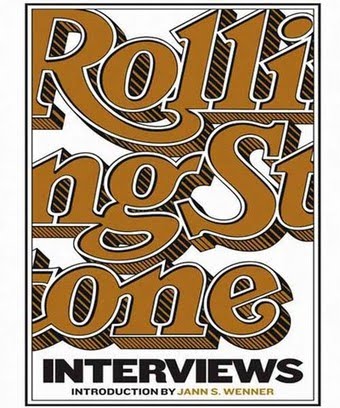
The Rolling Stone Interviews


The Rolling Stone Interviews
Edited by Jann S. Wenner

Before I get into this, I want to note that I really did like this book. As an entirety, it's a good read and I blasted through its monstrous girth in three days. I don't want the rest of this blog post to sway anyone from reading The Rolling Stone Interviews. It is very, very worth it.

This book made me feel old. Allow me to explain in a slow and convoluted way.

Growing up, I was obssessed with rock n' roll. Not so much with the cult of personality that surrounds the genre, although that was part of it, but rather with the virtually instantaneous legend-generating power it carried over to its performers. I liked the fact that stuff I was listening to went from obscure to relevant, then iconic then legendary, often in the span of a single calandar year. It's a fun process to watch from the sidelines. I always wondered what it would be like for the performers.

And, of course, I really dig music. Still do.

I never really got into the People Magazine side of the equation. Who was screwing who, what band was suing what other band and what sorts of drugs so-and-so was using at the Grammys last night. That stuff didn't concern me nearly as much as the music and the energy it conveyed. Who cares what Kurt Cobain thinks or does? It's all about the guitar riff, It's about the lyrics. It's about the rock. I would like to assume I was too punk-rock for all the other nonsense, though, if I'm honest, I know I wasn't. I was simply nose deep in Michael Creighton novels and Martin Scorsese movies.

So it was interesting to find The Rolling Stone Interviews fall into my lap a couple of weeks back. I'm certainly not insinuating that Rolling Stone Magazine is akin to People Magazine but I never read either growing up. I was blissfully unaware of the personal lives of most of the bands and musicians I enjoyed. I wasn't entirely ignorant, but the details simply didn't interest me at the time. So this book was a revisitation to my music-listening past from a different perspective.

The book itself is an anthology of dozens of interviews ranging back to the beginnings of Rolling Stone Magazine in the mid 1960s and includes interviews with everyone from Jim Morrison in 1969 to George Lucas in 1977 to The Dalai Lama in 2001. It is organized in chronological order so once I got into the interviews conducted after 1980, it was fun to watch my childhood pass as I was reading the chronicles of the stars.

Many of the non-musical interviews proved to be quite interesting. I really enjoyed reading the interviews with Bill Clinton, Johnny Carson, David Letterman and Bill Murray. Other interviews were captivating because Rolling Stone chose an unorthodox interviewer. Andy Warhol with Truman Capote, Robert Palmer with Eric Clapton. But the vast majority of the musician interviews read like laundry lists of petty disputes, drugs and personal problems leaving me wanting to slap the Holden Caufield out of them all.

The fundamental problem with rock and roll interviews is that when you get down to it, rock stars are as humdrum as lawyers, teachers or doctors. Oh, they think they are different (in the case of John Lennon... he knows he's a genius). But when you begin to read these accounts of their lives they all begin to sound oddly consistent.

They have gone from struggling musician (and have you ever talked to one of those? Yeesh!) to ultra-famous and mega-rich, pretty much overnight. And each of them from Pete Townshend to John Lennon to Axl Rose to Eminem answer questions as if they were the first musician in the history of the world to encounter troubles in the trappings of fame. Don't these guys read Rolling Stone Magazine? Didn't they ever listen to The Wall? Or Bob Seger's eponymous hit Turn the Page? It's hard no to notice the droning pattern.

This is a generic sample of the sort of answer you get from (insert name of famous musician here):

"I hooked up with {insert name of mildly famous session musician name here} in (insert the name of American or British city here). We decided to crash at {inesrt hip record company exec name here)'s house for the night. We ended up staying there three weeks tripping on acid and peyote, shooting guns and playing old {insert name of eccentric musical style here} records. It was a wild time, man. We shared something real. The (insert decade here} were a truly magical ride."

Seriously, when did being a rock star become so boring. From Pete Townsend to Eminem and virtually every pop star in between was like reading the same interview over and over. From complaining about singing the same songs night after night to to battling their heroin addictions to dealing with their "personal demons." It's all such a stereotype.

This isn't to say there weren't some really interesting bits. I quite enjoyed reading about David Letterman's friendship with Johnny Carson and Bill Clinton's musings on the evolution of the "Don't ask, don't tell" policy. Jack Nicholson's philosophies on monogamy were a riot, Truman Capote and Andy Warhol were hilariously pretentious, and Tom Wolfe is fascinating.

Nor is it to say that there aren't any musicians with something interesting to say. Patti Smith, Mick Jagger and Leonard Bernstein deliver eloquent interviews that delve a little deeper into the music and the creative process. Perhaps it has something to do with their ages when they were interviewed. Each of them had been in the industry for over two decades once they sat down with Rolling Stone.

Which gets me back to the thesis of this entire blog post. The book made me feel like an era had passed in my life. These guys (Ozzy Osbourne, Kurt Cobain, Neil Young, Eric Clapton, Jim Morrison etc...) who I idolized so much when I was younger just turned out to be snivelling, whiny kids with too many toys and not enough friends. Who really wants to read an interview with a kid with very little of anything to say other than how many drugs he took last weekend? Perhaps to many this isn't such a momentous realization but for me, someone who didn't read the gossip rag side of the music indusrty until recently, it has really spilled the smack out of the plunger.

Ironically, it is old man Mick Jagger who puts it so succinctly when he says:

"I think it's very important that you have at least some sort of inner thing you don't talk about. That's why I find it distasteful when all these pop stars talk about their habits. But if that's what they need to do to get rid of them, fine. But I always found it boring."

Amen, Mick.

Of course, egoism is not nearly enough to devalue the wonderful music many of them made. I will simply go back to listening to the music and turning a deaf ear to their nonsensical ramblings. It only reenforces my opinion of recluses. The less you speak, the more you say.