Showing posts with label salman rushdie. Show all posts

Wednesday, April 17, 2013

Flesh


Flesh
By Khanh Ha


[The following review is part of the Flesh blog tour being organized by Historical Fiction Virtual Book Tours. This review also appear at the superbly excellent blog I Read A Book Once. For a full list of tour hosts, see the tour page.  For more information on Khanh Ha and his work, check out the author's website.]

I'm not an expert on the subject but I have noticed a shift in Asian historical fiction over the past decade or so. My first exposure to Asian literature tended to place an inordinate amount of emphasis on colonial powers. Whether intentional or accidental, it's hardly surprising that Asian literature would be colored by the regions tempestuous relationship with the domineering west, especially among writers writing in English, given the historical largesse that European power expansion had on the globe until well into the 1980s. Most (if not all) of the prominent Asian writers of the era were educated in the colonial education system. The end result were several generations worth of writers who examined their own culture as a reflection of a distant European culture. While the notion of colonialism was certainly one that deserved examination, it literally dominated the literature in a way that left very little room for other themes. In that sense, colonialism became the proverbial elephant in the bed for Asian writers.

However, as colonialism in Asia gradually recedes from the collective consciousness, we are presented with a second (and now third generation) of post post-colonial Asian literature (if this term is not yet coined, it's mine) come of age, there has been a sea change in the focus of literature from the Asian perspective. As a result of time and distance, colonialism has, mercifully, become less and less relevant as a theme in Asian literature. Asian writers are free to examine other, more organic experiences that have nothing to do with the White Man's Burden. Recent authors such as Jessica Hagedorn from the Philippines, Jeet Thayil from India and Amitav Ghosh from Bangladesh are just a sampling of the new wave of refreshingly innovative Asian writers on the current literary landscape.

If you are looking out for names to add to the growing list of skillful Asian writers, look no further than Khanh Ha. His debut novel, Flesh is a somber, brooding and grim exploration of revenge and moral responsibility in turn-of-the-century Annam (present day Vietnam). If debut novels are, in essence a declaration of an author's intent, then you could do a lot worse than pick up this interesting little novel by Khanh Ha.

Flesh is told from the perspective of Tai, a young Annamese boy who witnesses his father's execution for banditry in the opening pages of the book. Tai's family reclaims his father's body but not the head, which is sent to a neighboring village to be displayed. Tai makes it his own personal mission to reclaim his father's skull from the village and provide it and his father's body, according to East Asian tradition, with an auspicious resting place. This daunting mission takes Tai from his village to the city of Hanoi and under the wing of a wealthy Chinese businessman and becomes involved, both physically and psychologically, with a beautiful young woman from Yunnan.

Flesh is the quintessential story of revenge. At its heart it is a brutal tale about brutal people living brutal lives during a brutal time. But if all you take away from Flesh is its moodily executed story of revenge, you are only getting half the picture. At its core, Flesh is about coming of age and trying to be a good person and do the right thing in a world where the temptation to resort to crime and murder are all too common. Through Tai, we are exposed to a cruel and remorseless world of banditry, savagery and addiction. Tai walks the razor's edge of temptation on virtually every page of the novel and, like most people, succeeds as much as he fails in trying to be a decent human being along the way. In that respect, Flesh is as much a novel about humanity as it is about humanity's proclivities toward barbarity.

Ha's prose is dream-like and poetic. It has a lucid quality that, in it's better moments, adds volume and flair to the writing, though in portions, Ha's style gets the better of itself and becomes a convoluted morass of thoughts. I had mixed feelings about Ha's style. He tossed in enough great writing to make me sit up and take notice, but its uneven quality betrays his inexperience as novelist.

Flesh is not a great novel, but it is a very good one. As a purpose statement, even this inconsistent work is worthy of notice. I think that readers of Asian literature, and specifically Asian historical fiction, should take notice of Flesh. Ha has laid a foundation for what could be a very promising career.

Friday, October 5, 2012

The Remains of the Day


The Remains of the Day
By Kazuo Ishiguro

This is the third Kazuo Ishiguro novel I have read in the past twelve months. If there is one overriding theme throughout them (the others being An Artist of the Floating World and Never Let Me Go) it is that Ishiguro is not interested in the story that appears on his page so much as he is interested in the story going on in your head whilst you are reading the words he put on his page. More directly, Ishiguro's novels are about the story not being told as opposed to the story being told. Furthermore, like his other novels, The Remains of the Day may not even really be about what it's about but rather may be an elegantly crafted metaphor about something entirely different. If I've sufficiently confused you, good. Let's get on with it, then.

The Remains of the Day is Ishiguro's third novel. Published in 1989, it was the winner of that year's Man Booker Prize and has garnered the status of classic since then, and for good reason. The novel is a thematic work of genius that examines (but doesn't examine) the subjects of dignity, loyalty and social constraints in post-colonial Great Britain as well as being a metaphor for the very same Great Britain.

The story centers upon Stevens, the butler of Darlington Hall, an old country house occupied by a preeminent English gentleman prior to World War II but currently (1956) owned by an American who bought the house (complete with authentic English butler) after the death of its former occupant. The story is ostensibly about short motor car trip undertaken by Stevens from Darlington Hall to the West Country in order to visit a former colleague. The story progresses as a series of journal entries along the way in which Stevens elucidates on the finer points of the domestic services industry and what (not who) makes a good butler. He also recounts several key events that occurred during his tenure at Darlington Hall that speak volumes about himself, his staff, his employer and the world around him. Though Stevens seems like a trustworthy character and one would hardly call his judgment into question, one must continuously question his ability to recall instances with the clarity this story requires. This gives the entire narrative a subconscious haze that must be navigated at all times.

The entire narrative is written in the stiff colonial language of the gentleman class and Stevens, like the people he has worked for in the past is obsessed with how he is perceived. Language and decorum are , therefore, tools in his profession as a way in which to cultivate an air of dignity benefiting a house such as Darlington Hall. ItThey are also self-constructed walls of social and class constraint that willingly bind Stevens to the house and the gentleman therein, regardless of his own opinions.

In lieu of thinking for himself, Stevens adopts an unconditional trust in his employer. Loyalty, dignity and professionalism trump all personal issues. In one particular scene which plays out as both comedy and tragedy, Stevens carries out his duties on a especially busy evening while his father falls ill and dies. It is an apt description of the social constraints that bound the class conscious British between the wars.

Buried deep within the bedrock of Steven's recollections is a more personal account of Darlington Hall's housekeeper, Miss Kenton. It becomes plainly apparent to the reader that Miss Kenton and Stevens have significant feelings for one another, but their professionalism, coupled with Steven's inability to read subtlety and nuance (to the point that I began to think Stevens might simply be mildly autistic, but I'll leave the psychological analysis of this novel to more capable reviewers) conspire to keep them apart. Even when a simple word or gesture might have broken the proverbial ice, they remain colleagues throughout, much to the consternation of this reader.

There are a lot of levels from which a reader might read this novel, but the most interesting (at least for me) was that The Remains of the Day is a brilliant metaphor for the end of the British Empire. In fact, the metaphor is so apparent (once you notice it) that it rivals Animal Farm in its bluntness. The novel itself is set in 1956 and although it is never mentioned in the book, that year coincides with the nationalization of the Suez Canal by General Nasser in Egypt. In Great Britain, the loss of the canal marked the end of the Empire. The era of the gentleman, country houses and the butler was over and Stevens himself is has become a relic of the past, a quirky historical curiosity sold along with a house to an American with a great deal of knowledge about colonial Britain but no idea how to actually be a gentleman.

But at a deeper level it is a social commentary on the relationship between crown and Empire. Lord Darlington represents the crown and the butler Stevens represents the Empire in this exquisite analogy of pre- and post-war Britain. Much like the pre-war British colonies in Asia and Africa, Stevens places an undue and undeserved amount of trust in Lord Darlington only to find that, in the end, Lord Darlington was involved in affairs far beyond his scope of understanding. Indeed, Lord Darlington represents a bygone England and his views are not even remotely in tune with the times. Naturally, Stevens remains unconcerned with his lord's affairs and serves him any way he can.

When war breaks out and Darlington finds himself on the wrong side of the line, it is Stevens that suffers most. And when Lord Darlington passes away, Stevens remains, left alone to pick up the pieces under the watchful eyes of an American. The parallels between this story and the demise of the Empire are so plentiful it probably merits a second reading at a later date.

The fact that Kazuo Ishiguro can write novels with so much nuance and subtlety is extraordinary. It takes a very gifted writer to write novels that work on a multitude of levels. Off the top of my head I can only think of a handful that have that capacity. I would hazard a guess that this novel wouldn't appeal to everyone due to its verbosity and pace (it is rather slow in bits) but The Remains of the Day really pays off in the end. I know that Salman Rushdie's novel Midnight's Children has been deemed the Booker of Bookers but I'd give the nod to The Remains of the Day as the best Booker winner I've ever read.

Saturday, April 14, 2012

Tinker Tailor Soldier Spy


Tinker Tailor Soldier Spy
By John Le Carré

In case you are wondering, John Le Carré is not going to hold your hand. Not even for one page.

You'd be well served to do your homework before attempting Tinker Tailor Soldier Spy, John Le Carré's classic Cold War spy novel featuring the enigmatic George Smiley and the first novel in his Karla Trilogy. You are going to need all your knowledge about Cold War era espionage to decipher this narrative, but I'll come back to that in a bit, but first a little background. Unlike Le Carré, I will hold your hand (and take you out for a nice steak dinner, if you are inclined).

Tinker Tailor Soldier Spy progresses via a series of flashbacks and tracks the history of the Circus (the in-house name of M16, the Secret Intelligence Service). After an agent engages in a love affair with the wife of a Soviet intelligence officer in Hong Kong, it becomes apparent that the British office has been infiltrated by a mole. Smiley has the unenviable task of ferreting out the mole, spying on the spies as it were. The title of the novel are the code names given to the potential spies in the British intelligence service. A trap is set, the culprit is apprehended and there's a neat little twist ending that... oh who am I kidding? I have no idea how this book ended. I finished it, but I'm not entirely sure what happened.

Tinker Tailor Soldier Spy is considered a classic in the spy genre and was recently made into a film starring my favorite actor of all time, Gary Oldman, as George Smiley. the film garnered several Academy Award nominations including a Best Actor nod for Oldman (good for him!). I can't vouch for the film, though because I haven't seen it and after reading the novel, I have no plans to do so (even if it does have Gary Oldman... I'm not a fanboy). That's how much this novel frustrated me.

I's not no idjit, ya hear? But I couldn't make heads nor tails of this book. It was borderline nonsense to me. Entire chapters would go by and I had no idea what had just happened. At times I felt like I was reading a foreign language. I'm not the sort to be intimidated by a novel and I'm more than comfortable diving into classic novels that others find weird, verbose or abstract (I've read and enjoyed Naked Lunch, Vurt and Pussy, Queen of the Pirates, I'll have you know!). But even with the Wikipedia page and other sorts of cliff notes, I had trouble understanding this book. I realized there were flashbacks and I could follow the storyline at times. but there seemed to be a never-ending chorus line of minor characters and pointless tangents. It was an overload of information!

And the jargon, my GOD! I was constantly going back to find out that the hell a lamplighter or shoemaker or a janitor was. It was infuriating. I found myself drifting off for pages at a time and not really caring about what I had missed. Not a good sign when reading.

Now, I know that John Le Carré is a well respected spy novelist and I'm not going to go so far as to disrespect the man on this blog like I did to Cathy Lamb. Salman Rushdie is not everyone's cup of tea, but his reputation affords him some wiggle room from people who don't like his work (even from Ayatollahs). I think I owe Le Carré the same courtesy. So, instead of rambling on about why I didn't like this book, I'd like to hear from anyone out there that did like this book and why? Given its stature as a classic, there must be more than a few people out there that love this book. I'm addressing you! What did I miss here? How could I have read this book differently and enjoyed it? Really! I hate it when I don't get it but....

Tinker Tailor Soldier Spy? I don't get it.

(It does have a cool cover, though).

Sunday, March 11, 2012

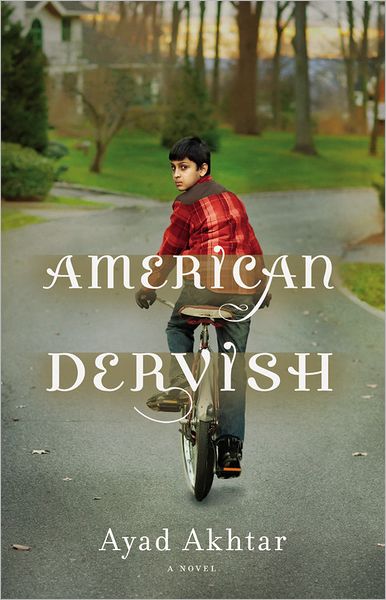
American Dervish


American Dervish
Ayad Akhtar

What follows is definitive proof that my Kindle was money well spent.

I listen to Fresh Air on NPR while I run. I find that it's more interesting than music and a great way to stay informed about cultural, political and social issues while sequestered in one of the most out of the way places on the planet.

A few weeks back, Terry Gross (my favorite radio host) interviewed Ayad Akhtar about his new novel American Dervish. I was intrigued by the premise of the book but, like most things I hear on Fresh Air, I filed it away in my brain. A week later, I read a rave review of the novel in The Atlantic. Two mentions of the book in a week coupled with my weakness for novels with strong religious themes sent me racing to Amazon.com to purchase the book for my Kindle.

Before my Kindle I would have had to wait until A) Someone brought the book to town and saw fit to lend it to me B) I went to Taipei and, with any luck, happened to see it in one of the two English bookstores in the city or C) Asked someone from back home to buy it for me and send it overseas. Option A is a crapshoot, option B happens about three times a year and option C is rarely, if ever, invoked for fear of inconveniencing anyone back in Canuckistan.

For the first time in a decade I have the power to read books that are current (aka published in the same calendar year as I read them) and comment on actual trends as they happen as opposed to years later. For me, the Kindle isn't so much a neat toy in which to download novels and save money and paper, it has rendered me relevant for the first time since 2002. For that I am grateful.

Now, onto American Dervish.

American Dervish is a poignant novel about growing up Muslim in the American midwest (Milwaukee, to be specific). The narrative follows the early adolescent years of Hayat Shah, the impressionable (and repressed) son of a successful, areligious Pakistani-American doctor and his wife. While life in the Shah household is far from perfect, it is turned upside down with the appearance of Mina (a friend of the family escaping an abusive relationship in Pakistan) and her some Imran. Mina presents Hayat with his first Quran and proceeds to instruct him on the nature of Islam, and encouraging him to become a hafiz, one who knows the Quran by heart. What follows is a spiritual awakening (of sorts) within Hayat that skirts dangerously close abject racism and extremism.

I have read other books that have had Muslim protagonists (though, I admit, not that many) and, for the most part, Islam is treated with a degree of respect and awe. I've not come across a lot of novels that have really tackled some of the more nefarious aspects of the faith. While there are literally thousands of novels that question (and even berate) Christianity, I have found that most novels about Islam tend to handle the subject with kid gloves (non-fiction is a different story, of course). Mercifully, American Dervish is not guilty of such evasiveness.

Maybe I haven't read enough novels about Islam but I have read The Satanic Verses. Salman Rushdie has been living in hiding for decades due to what he wrote about Islam in his 1988 novel and I didn't think it was anywhere near as inflammatory (for Muslims, I presume... not me) as American Dervish. I cannot pretend to know much (anything) about the modern Muslim-American experience but Akhtar does not paint the brightest picture. In fact, this book can be quite bleak in its portrayal of Muslims in America (and Muslims in general). Akhtar spends a lot of time discussing the clashes between old world and new world interpretations of Islam which is the root much of the conflict in the book.

At points in this book the author seems to seethe with anger and frustration at the Muslim community in America and raises some pretty provocative questions about racism toward Jews, women's rights, Sharia Law and contradictory Quranic scripture. In the novel, Hayat's father in particular spits vitriolic venom at the established Muslim-American community and their apparent herd-like mentality. But the novel stops short of descending into a acrimonious anti-religion diatribe. Behind the anger and disappointment there is a genuine feeling of warmth and affection for Islam and a real desire to raise questions about the modern nature of a very old religion. It's a testament Akhtar that he can walk the line between disloyalty and fidelity to the faith that has remained under the social and political microscope for over a decade.

I'm not going to lie, although this book is highly entertaining, it is difficult to read in places. There are some real uncomfortable moments when the reader is expected to check their judgmental self at the door and admit to themselves that they cannot understand the cultural mindset (unless, of course, you are a Muslim and have read this book. Then perhaps you could enlighten me as to whether this is an accurate depiction of the Muslim community in America. Obviously I have no idea). Furthermore, I found that more than once I felt as if Akhtar is treading water in the narrative, unsure of where to go next. There is an uneven feeling in the story that bogs it down in places.

But none of this should dissuade you from reading this novel. I think this novel and its over-arching themes were a long time in coming. In a world that has spent a lot of time and energy pigeon-holing and vilifying Islam, it's high time a novelist took it upon himself to spend some time navel-gazing the tradition and its position in the modern world. In 2012, it is refreshing to see a novelist that is prepared to embrace the often contradictory nature of Islam and examine the persistent tensions that arise within the community struggling to reconcile old world tradition in the New World.

As for me, I'm feeling refreshed as well. If for no other reason than I might be ahead of the reading curve for the first time in a decade.

Saturday, October 8, 2011

Middlesex


Middlesex
By Jeffery Eugenides

I feel like my reading as of late has been a little incestuous. Middlesex is the second book in four that takes place in part or entirely in Greece (the other being Captain Corelli's Mandolin) and it is the second book in a row that features incest as a predominant theme in the narrative. Hell, it's the second novel in a row that has a character with the name Stark. If you have just discovered this blog recently, I assure you this is completely coincidental, but perhaps apt given the subject matter of Jeffery Eugenides' Pulitzer Prize winning novel about hermaphrodism.

Middlesex is perhaps the only novel in the history of novels were the protagonist is not a person so much as a gene. A recessive gene. The novel follows the gene from a small Greek village in Turkey in the early twentieth century through to Detroit the middle of the 1970s via three generations of a Greek-turned-American family with a history of incestuous relations. These tragically rendered relationships allow for the recessive gene for hermaphrodism, which has lain dormant within the family for a few centuries, to manifest itself in the third generation via a little girl named Calliope.

At once, the novel follows the traditional pace and style of a Salman Rushdie novel. Tracing a family lineage back a couple of generations in order to get a strong feel for the family and where the protagonist comes from. By the time Calliope makes her entrance into the narrative, the reader is more than familiar with her/his entire family. I always like this sort of novel. I feel like part of the family by the end and it gives Calliope a richer texture than she would have in a less epic style.

Jeffery Eugenides does a stellar job with this material and has written an achingly beautiful and often hilarious story about transformations. He not only tackles the obvious transgender focus but also secondary transformations: familial, social, economic, historical and philosophical that occur within Calliope's family, her surroundings and in America in general. All sorts of other incidental transformations make Middlesex a compelling read, worthy of the recognition it has received. He is true to his themes without bashing the reader's head in with his message. What I especially liked was Eugenides' handling of gender issues. He raises all sorts of questions concerning the traditional notion of gender without resorting to bullshit social science definitions and theories or political rhetoric. He treats his characters with a measure of humanism and empathy that few, if any, writers would be able to muster with such difficult subject matter.

I have not read The Virgin Suicides but it has been on my radar for years. From what I understand it is a pretty superb book in its own right. If so, Jeffery Eugenides has firmly established himself as one of the best writers working in America today and Middlesex is a novel that is not afraid to stretch the bounds and discuss issues that are often seen as uncomfortable or taboo. He gets to the core of his characters without mincing words, a rare talent this day in age.

Middlesex is not for the conservative at heart. People wit rigid ideas of social values and gender divisions should shy away unless that are open to some very different ideas. It's a shame, though. They'd be missing out on one hell of a great book.